
Before you order
Cooler in summer, warmer in winter.
A steel building on a January afternoon can be the hottest place on the block. A few extras, chosen before it is built, turn it into somewhere you actually want to spend time.
How it works
Where the heat comes from, and where it goes.
Three things make a steel building uncomfortable: the sun on the roof, hot air trapped under the peak, and damp. Each extra on this page deals with one of them.
- 1The sun hits the roofA steel roof faces the sun all day. How much heat it takes in depends mostly on its colour.
- 2Insulation stops it coming throughA blanket under the roof sheets keeps that heat up in the steel and out of the room. It also stops the drips.
- 3Hot air rises and gets stuckHeat collects under the peak. A Spinaway roof vent, just below the ridge, lets it out, spun by the wind, no power needed.
- 4A skylight lets the sun straight inLovely light, but the sun comes in with it. Where you put it matters.
- 5Fresh air comes in lowAs hot air leaves at the top, cooler air is drawn in through the doors and gaps down low.
The free one
Start with the roof colour.
It costs nothing extra and it works every sunny day. BlueScope measures how much of the sun’s heat each COLORBOND® colour soaks up. The roof matters most, because it faces the sun all day.
Love a dark building? Keep dark walls and choose a lighter roof, or keep the dark roof and add insulation under it. Both work.
Our most popular extra
Insulation: the one people wish they had ticked.
About one in four of the buildings we sell goes out with roof insulation. It is a blanket that sits under the roof sheets, and it changes how the whole building feels, all year.
- Cooler in summerThe heat stays up in the roof sheets instead of radiating down onto you, the car and the workbench.
- Warmer in winterA heater actually gets somewhere. Without insulation, the warmth goes straight out through the steel.
- No more dripsOn a cold night, damp air meets cold steel and turns to water on the underside of the roof. By morning it is dripping on whatever is below. Insulation stops it.
- Quieter in the rainRain on bare steel is loud. With a blanket under the sheets it is a soft patter.
Roof first, then walls.
The roof takes the most sun, so roof insulation does the most good. Add the walls too if you will heat the building, work in it for hours, or turn it into a gym, a studio or a games room.
Easiest while it is being built.
Roof insulation goes in under the roof sheets as the building goes up. Adding it later means working under a finished roof, so it is far simpler to include it in your quote now.
Roof vent
The Spinaway: a fan that needs no power.
A COLORBOND® Spinaway roof vent sits on the roof just below the ridge, close to where the hottest, dampest air in the building collects. The slightest breeze spins it, and as it spins it draws that air up and out. About one in nine of our buildings has one.
- No power, no running costsThe wind spins it, and a spinning vent draws air up and out of the building.
- Pulls the damp outDamp air causes rust on tools, mould on stored things and fog on the car. Moving it out keeps everything drier.
- Takes the edge off the heatThe hottest air in the building gathers under the peak, and the Spinaway sits on the roof just below it.
Best with insulation. Insulation keeps the heat out. The Spinaway lets out whatever heat and damp still get in. Together they do far more than either one alone.
Skylights
Free daylight, with one catch.
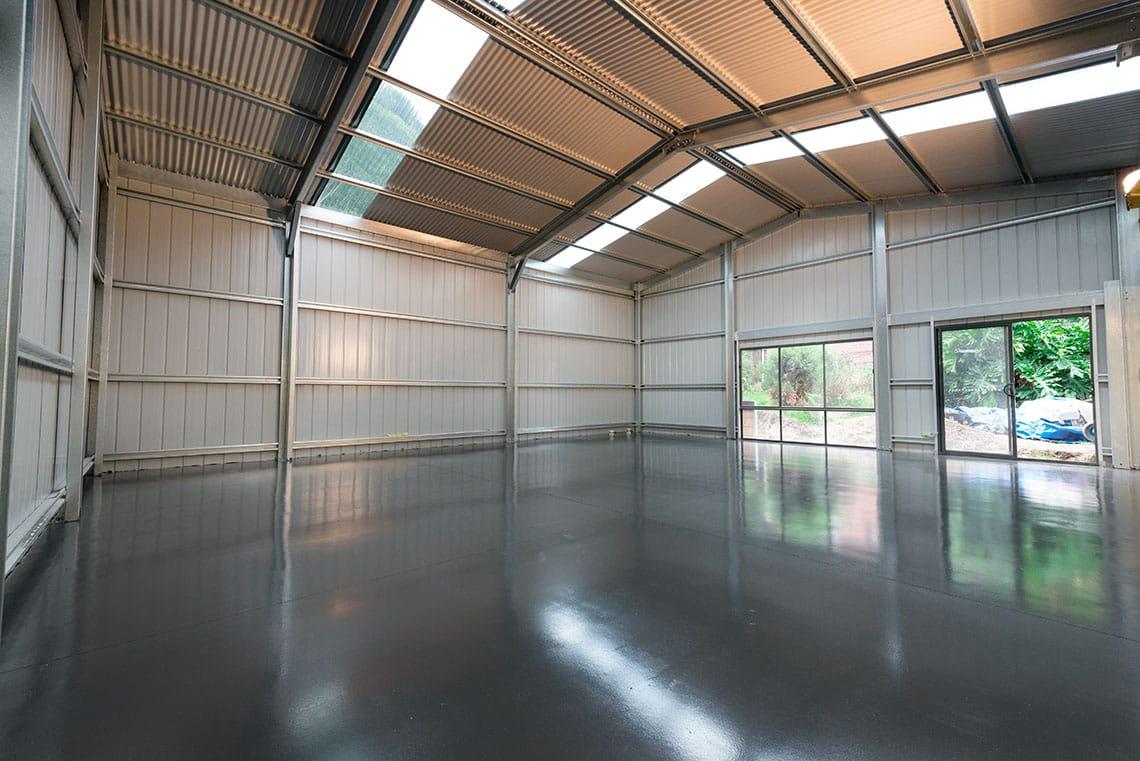
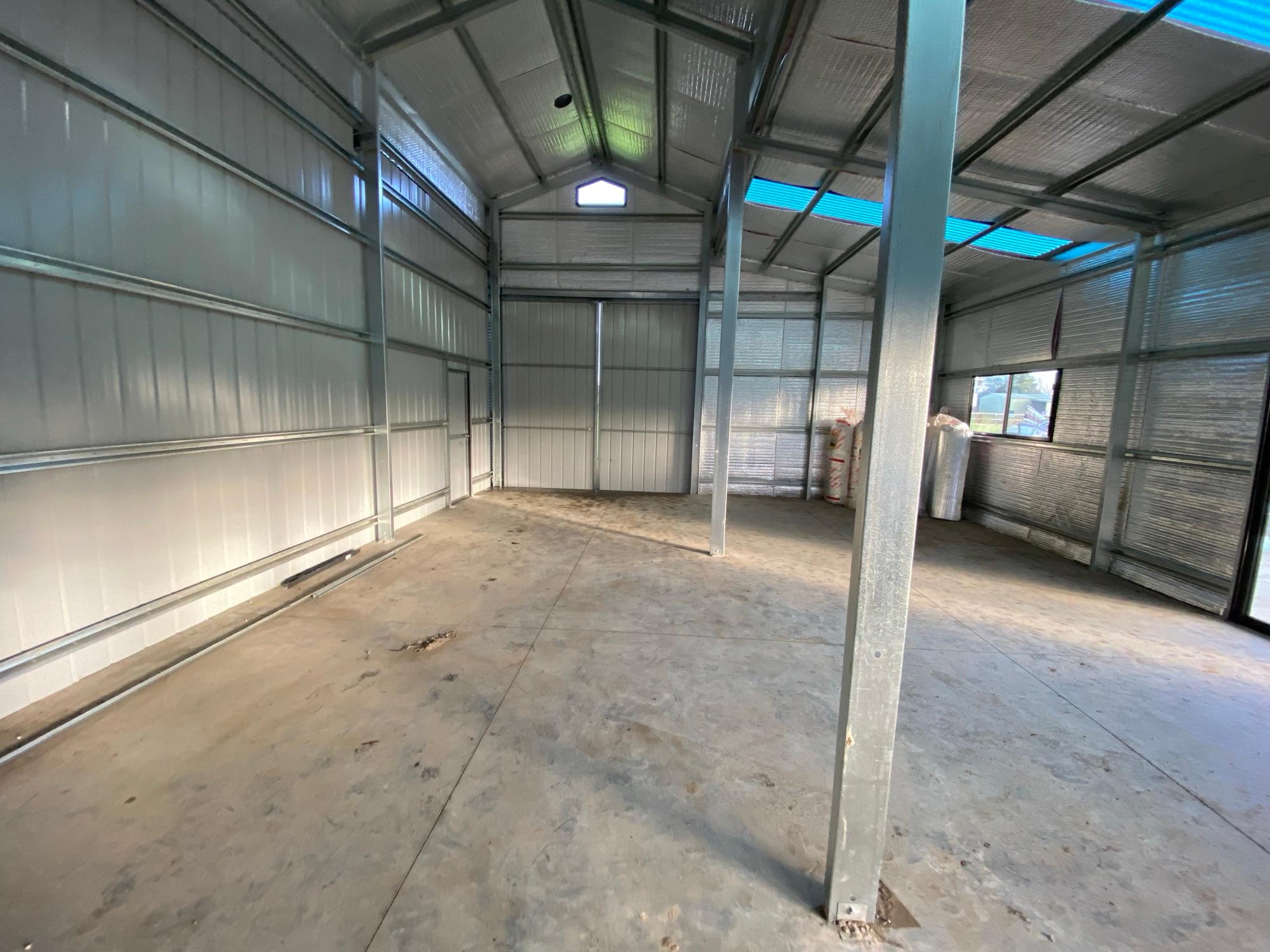
A skylight is a clear sheet in place of a steel one, and it lights the building without a single bulb. That is why about one in six of our buildings has at least one.
The catch: the sun comes in with the light. Standing under a skylight in summer is like standing under a sheet of glass in a car park. So it is worth thinking about where they go.
- Put it over the floor and the parkingLight falling on the floor or the car is welcome. Keep it away from the spot where you will stand and work in January.
- One or two is often enoughA single skylight lights a surprising amount of floor. Add more only if the building is deep, like a barn.
- Pair it with a SpinawayWhatever heat the skylight lets in, the vent helps let out.
- Insulate the rest of the roofInsulation cannot sit under the clear sheet, so the rest of the roof has to do the work.
Near the sea
COLORBOND® Ultra steel: thicker, stronger, made for salt air.
Salt spray is hard on any metal. For buildings close to the surf, BlueScope makes COLORBOND® Ultra steel, with extra protection built in against salt. Ours comes in 0.48 mm BMT steel, thicker and stronger than the standard 0.42 mm BMT. BMT means base metal thickness: the steel itself, measured before the coating and paint go on. Ultra costs more than standard COLORBOND® steel.
- Thicker steel0.48 mm BMT instead of 0.42 mm BMT. A heavier, sturdier sheet on the roof and walls.
- Made for the coastBlueScope’s steel for buildings close to the sea, where salt spray is in the air every day.
- Seven coloursIncluding Monument and Woodland Grey, two of our customers’ favourites.
Building near the coast, at Torquay, Phillip Island, Lakes Entrance or anywhere you can smell the salt? Ask for COLORBOND® Ultra steel on your quote request, and tell us how close you are to the water.
How close is too close depends on the site: the wind, how sheltered it is, and whether rain washes the salt off. Colours are BlueScope’s Classic finish range for COLORBOND® Ultra steel roofing.
Put it together
The comfortable set.
For a garage or shed you will use all year, a workshop, a gym, a studio, a place for the car you care about, this is what we would put on it.
- 1Roof colourPick the lightest roof you are happy with. Darker walls are fine.Read why
- 2Roof insulationThe one that makes the biggest difference. Add the walls if you will heat it or work in it.Read why
- 3A Spinaway roof ventLets the hot, damp air out at the top.Read why
- 4Skylights, placed wellDaylight over the floor and the car, away from the workbench.Read why
Mention the extras you want on your quote request, and your Building Solutions Consultant will price them into your quote.
More guides
All guides → Before you orderThe concrete slabWhat it has to be, who arranges it, what the concreter needs from you, and the one thing you must not do early.Read the guide →
 Before you orderChoose who builds itThe $20,000 line, the certificate of consent, and the registered builder alternative. Which path fits which person.Read the guide →
 Before you orderRoller door sizesWhy the opening is smaller than the door, the opening you get for every wall height, and single or double doors.Read the guide →
 Before deliveryGetting the site readyThe checklist for the fortnight before the truck arrives. Access, services, the slab, and what to clear.Read the guide →
 Any timeShed words explainedGable, skillion, bay, purlin, span, knee. Every word you will hear from us, in one page, in plain English.Read the guide →
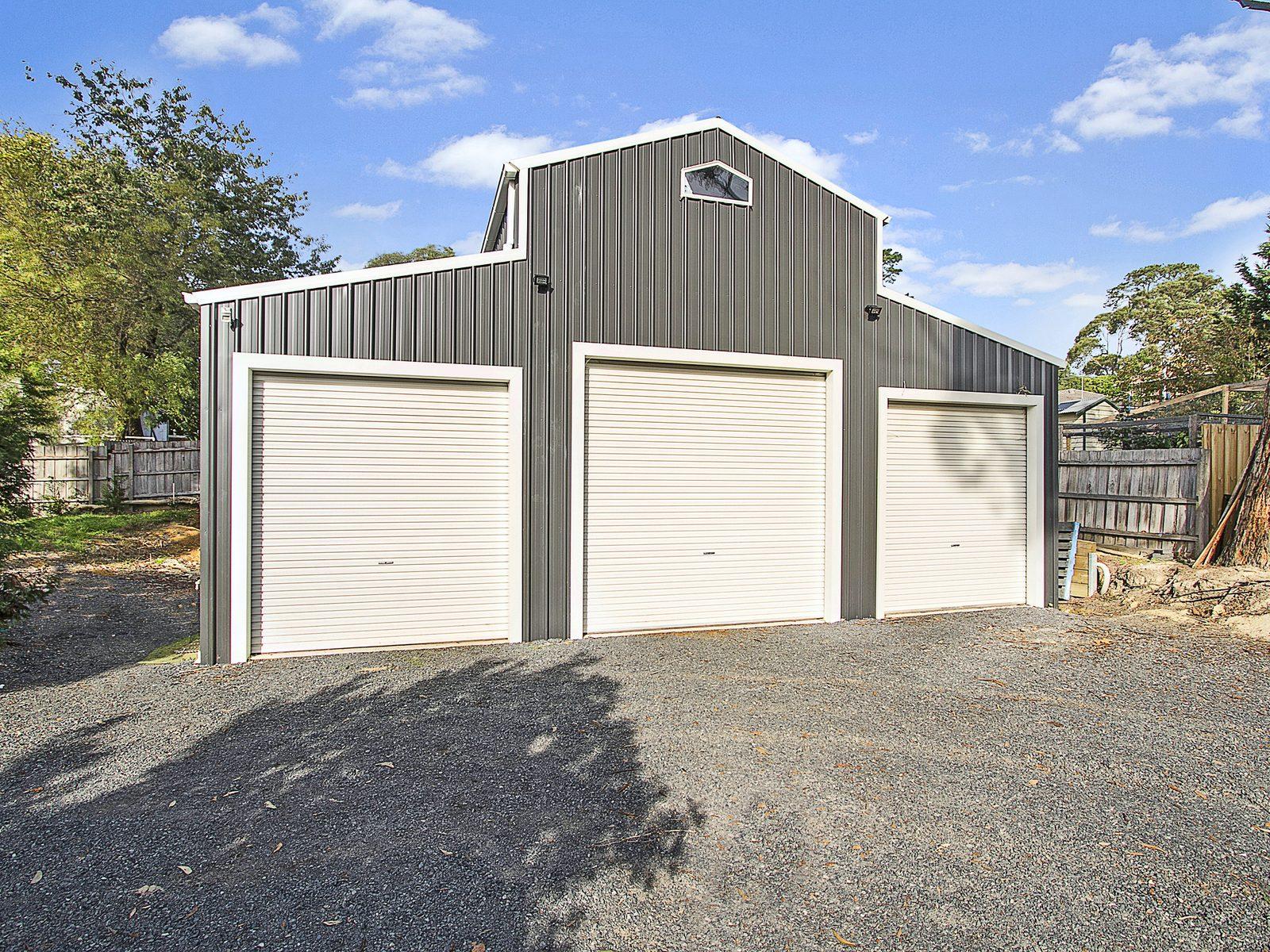 Before you orderCOLORBOND® coloursThe full range, and how to choose between the close ones.Read the guide →
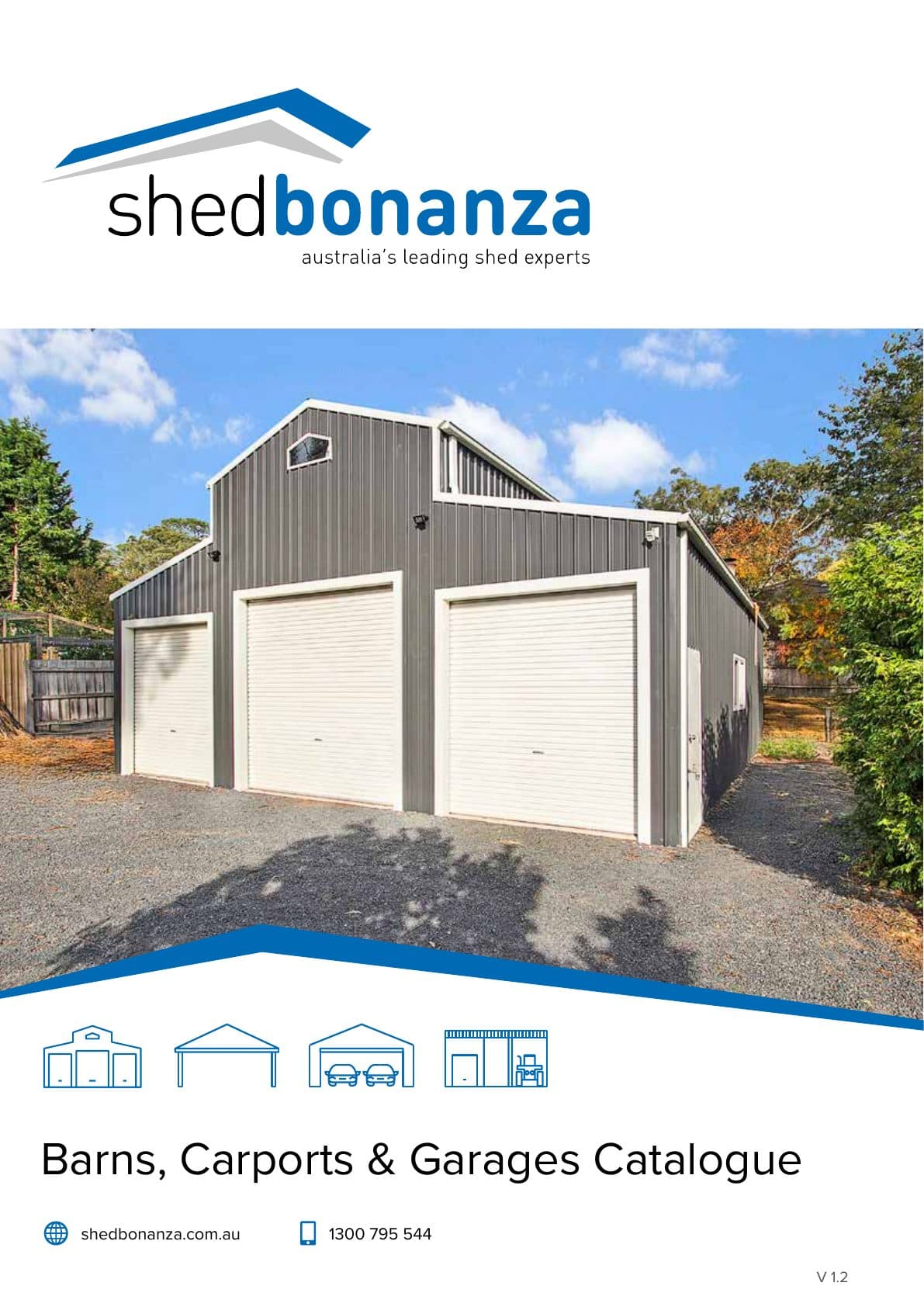
 Any timeBrochuresThe Barns, Carports and Garages catalogue and the Garden Shed catalogue. Read online, page by page.Read the guide →
Get your free quote
Tell us today. Hear back within one working day.
Start with five quick details, that is all we need to get going. Prefer to talk it through? Call us, or drop into a showroom.